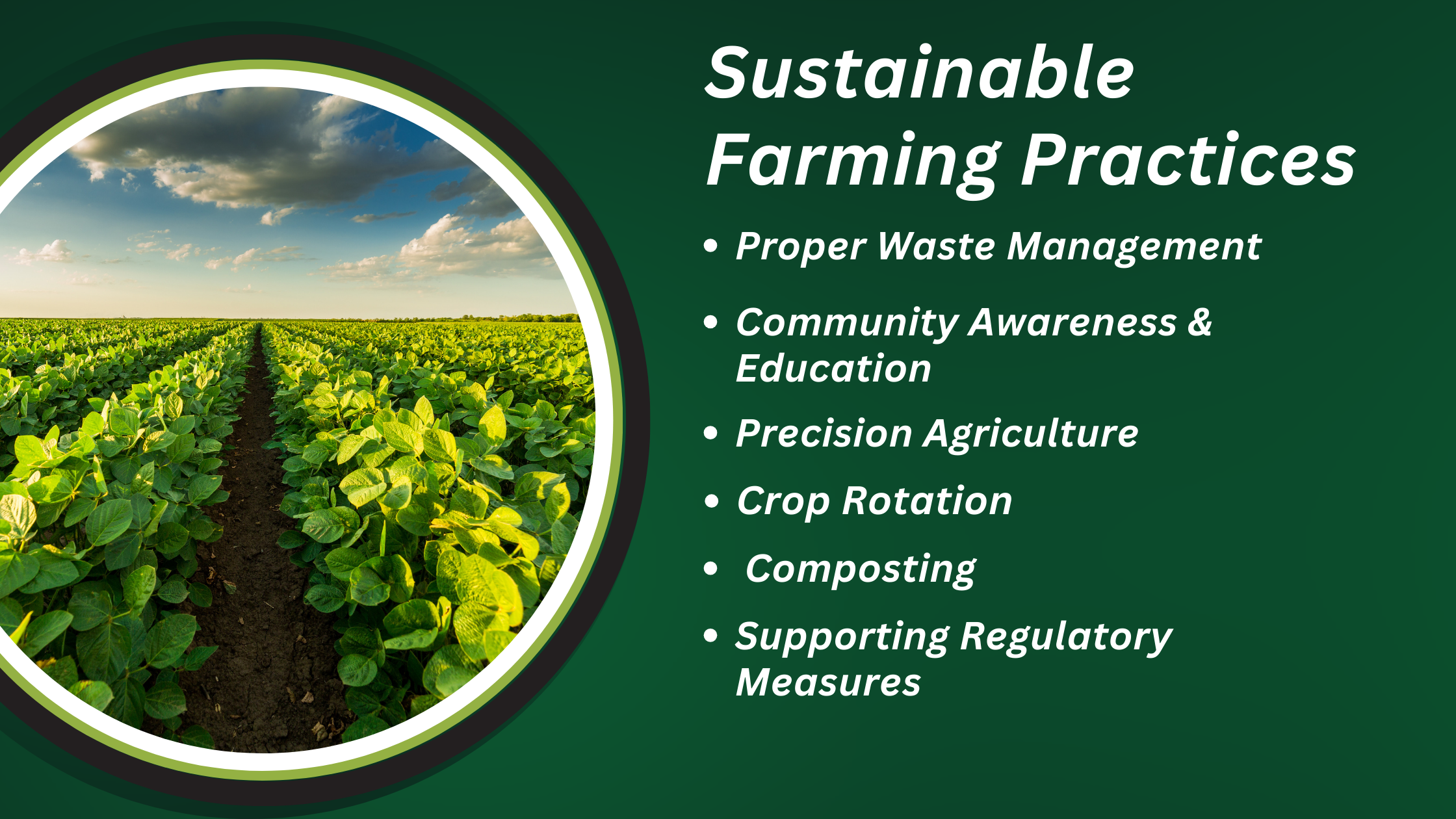
Farmers can implement sustainable farming practices, such as precision agriculture, crop rotation, and organic farming, to minimize harmful waste generation.
Composting:
Composting involves the natural decomposition of organic waste into nutrient-rich soil. This practice helps farmers recycle organic materials, enrich soil fertility, and reduce the need for chemical fertilizers.
Crop Rotation:
Crop rotation is a farming technique where different crops are planted in a specific order over time. This helps enhance soil health, control pests and diseases, and improve overall crop yield by maintaining a balanced ecosystem.
Precision Agriculture:
Precision agriculture uses technology, data, and analytics to optimize farming practices. This includes precisely applying resources like water, fertilizers, and pesticides, improving efficiency, reducing waste, and minimizing environmental impact.
Proper Waste Management:
Implementing proper waste disposal methods, recycling, and reducing the use of non-biodegradable materials help mitigate the impact of farm waste on the environment.
Community Awareness and Education:
Raising community awareness about the environmental consequences of farm waste encourages responsible practices. Education on sustainable farming techniques can empower farmers to make informed choices.
Supporting Regulatory Measures:
Advocating for and complying with existing regulations on farm waste management supports a collective effort to minimize environmental harm. Strengthening and enforcing these regulations are essential for promoting responsible agricultural practices.
This blog explores the environmental impact of agricultural waste, emphasizing its threat to soil, water, biodiversity, and air quality. By understanding the environmental challenges associated with farm waste and actively participating in solutions, we can contribute to a healthier and more sustainable environment.